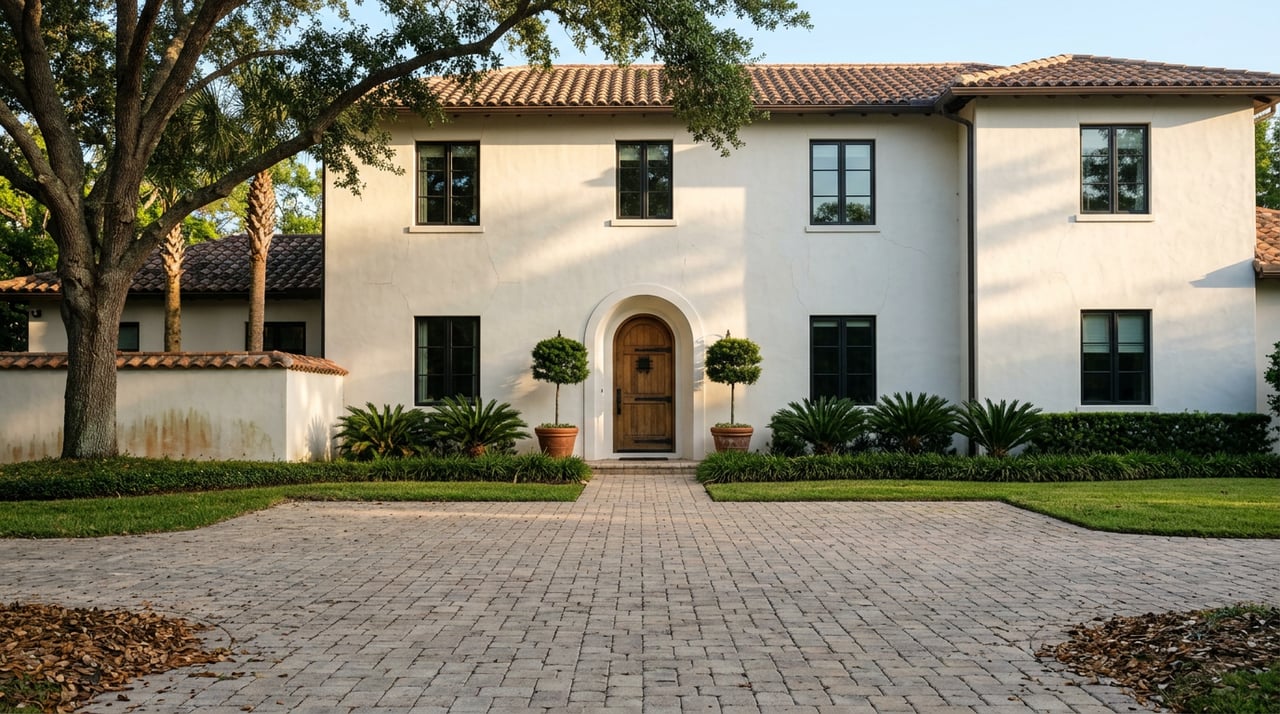
In Winter Park, "Historic" Doesn't Mean What Buyers Think It Means
September 10, 2026
September 10, 2026
If a house was built in 1938, sits on nearly four acres of Lake Osceola frontage, and was designed by the architect behind one of the city's most beloved landmarks, is it protected from the bulldozer?
In Winter Park, the honest answer is: not automatically. Not even close. The story of a lakefront estate called Merrywood, at 1020 Palmer Avenue, spent most of 2026 proving that point in public, and the lesson it leaves behind matters to anyone shopping for or selling an older, architecturally distinctive home in this city.
Start with the assumption most buyers carry into a search: an old, beautiful Winter Park house is probably protected. It usually isn't, unless someone has taken a deliberate, voluntary step.
Local historic designation in Winter Park is opt-in. The city's historic preservation program places no fee on designation and none on the design review that follows, but a property has to be nominated and approved before it carries any protection at all. Once designated, exterior alterations, additions, demolition, or new construction require a Certificate of Review from the Historic Preservation Board. Interior renovations are outside the board's reach entirely, and routine repairs like matching-style window, door, or roof replacement don't need board approval either. The board's authority stops at the exterior of a designated building. Nothing about a home's age creates that authority on its own.
That single fact reframes how a buyer should think about an old Winter Park house. Being old, being lovely, even being locally famous doesn't equal being protected. Designation does.
Merrywood was never on the Winter Park Register of Historic Places. When the Gilmer family, who inherited the estate from parents who bought it in 1977, filed for a demolition permit in early 2026, the city had no local ordinance to stand on. Officials said as much publicly: without local designation, they had no power to stop the demolition.
But there's a second, separate mechanism that operates independent of anything the city controls, and it's the one that actually slowed Merrywood down. The house appears in the Florida Master Site File, the state's official inventory of historical and cultural resources. That listing alone triggered an automatic 90-day delay before a demolition permit could take effect, giving preservation advocates a narrow window to organize.
This is the gap buyers and sellers routinely miss. Local designation and the state site file are two different lists, maintained by two different bodies, with two different consequences:
A house can check every emotional box for "historic" and still fall into that last category. Merrywood did, for most of its recent life.
The demolition clock forced a wider conversation, and along the way it exposed something useful about how these properties get valued. Reporting earlier in 2026 noted Zillow's estimate for Merrywood at $12.1 million against Redfin's estimate of $6.4 million, a gap of nearly $6 million on the same property at the same moment. A prospective buyer, Tara Tedrow, had it under contract for a reported $12 million while she pursued a lot split. The Gilmers ultimately sold the property in August 2026 for $15 million to a company called Lake Osceola Holdings LLC, tied to an Orlando attorney and an estate advisory firm.
Three numbers, one house, and a spread that automated valuation tools were never built to close. Architecturally singular, large-lot, lakefront property doesn't price off a comparable-sales algorithm the way a standard subdivision home does. It prices off land value, restoration cost, redevelopment potential, and how badly a specific buyer wants that specific address. Anyone pricing a distinctive Winter Park home, or evaluating what one is actually worth as a buyer, should treat a portal estimate as a starting conversation, not a number to negotiate around.
Winter Park's land development rules generally prohibit splitting lakefront lots. Merrywood's nearly four-acre parcel was exactly the kind of property that rule exists to protect: reporting at the time of the request pegged the land alone at more than $10 million, calling it the single largest lot on the city's Chain of Lakes.
The prohibition wasn't absolute. Tedrow requested a comprehensive plan amendment specific to this one property, allowing her to build a home on part of the land while marketing the rest, including the historic structure, separately. The Planning and Zoning Board approved the request 4 to 2 in early June 2026. The City Commission followed with a 3 to 2 vote on June 24 to amend the comprehensive plan for that single parcel, over the objection of city staff, who had recommended that historic designation be a required condition of the split. Commissioners rejected that condition after hearing that no buyer had stepped forward willing to restore the house.
"Until the house comes down we remain hopeful that a preservation option exists," said Betsy Rogers Owens, executive director of Friends of Casa Feliz and granddaughter of the home's architect, James Gamble Rogers II.
The precedent matters beyond this one address. A general prohibition on subdividing lakefront lots is not the same as an unbreakable one. For a buyer eyeing a large, older lakefront parcel with redevelopment in mind, or a neighbor concerned about what could happen next door, the Merrywood case shows the door is narrow but not sealed.
None of this happened in isolation. A separate, unauthorized demolition at 965 Lakeview Drive, a 1936 home overlooking Lake Virginia in the College Quarter Historic District, is what pushed the city to act in the first place. The Historic Preservation Board had approved plans for a major renovation and addition, along with demolition of a detached garage. What came down instead was nearly everything except a small portion of the first floor and the chimney. That episode led the City Commission in May 2025 to toughen the consequences for exceeding approved work. Owners who demolish or dramatically alter a designated historic structure without authorization can now be required to rebuild it exactly as it was, using authentic materials, and can lose any variances the board had granted for the project. One board member put the cost of losing those variances on a project that size at $500,000 to $800,000, on top of the $100,000 payment the contractor in that case made to the city's preservation fund.
That ordinance tightened the downside of stepping out of line inside a designated district. Merrywood exposed the opposite problem: there's little upside offered to convince an owner to opt into designation in the first place. As of July 2026, city leaders had asked the Historic Preservation Board to study incentives, including possible tax breaks for owners who keep historic structures standing, with proposals expected before the City Commission this month. Winter Park cannot force anyone to designate a property. Whatever comes out of that review will shape how many owners choose to opt in going forward, which in turn shapes how many of the city's older homes carry any protection at all.
For a buyer drawn to an older or architecturally notable Winter Park home, two questions belong on the due diligence list before an offer goes in: is the property on the Winter Park Register, and separately, does it appear in the Florida Master Site File. The answers determine whether renovation plans need board review, whether a demolition permit would face an automatic delay, and whether the home carries variances worth preserving.
For a seller with a distinctive property, the 965 Lakeview lesson is the one to remember. A board approval for one scope of work, a garage demolition, a facade change, a single addition, is not a blank check for anything beyond that scope. Since May 2025, exceeding it risks losing the very variances that made the project work financially in the first place.
For anyone treating a large, older parcel as land value first and structure second, Merrywood is proof that Winter Park's rules bend under the right circumstances, even on lakefront lots the code was written to protect.
Does buying a home in a Winter Park historic district limit what I can do inside it? No. The Historic Preservation Board's authority covers exterior appearance only. Interior renovations are not subject to board review.
Does historic designation hurt resale value? The city's own preservation materials state that designation is not a factor in property valuation and that assessed values in historic districts have held up over time, with buyers often drawn to the authenticity and character the designation protects.
If a historic Winter Park home has already received board approval for a renovation, can the owner still lose that approval? Yes, under the ordinance changes adopted in May 2025. If work proceeds beyond what the board approved, without going back for authorization, the owner can be required to rebuild to the original approved condition and can lose any variances tied to the project.
Whether you're weighing a lakefront estate with a past or a bungalow on a brick street in College Quarter, the paperwork behind the charm deserves the same scrutiny as the house itself. If you're considering a move into one of Winter Park's older neighborhoods, or thinking through what a distinctive property is actually worth before you list it, Denise Beserock can walk you through what a specific address is and isn't protected from. Let's Connect.
Stay up to date on the latest real estate trends.

Partner with Denise to turn your real estate goals into reality. Enjoy personalized service and dedicated guidance throughout every step for exceptional results.